I’m scrolling through Instagram on an ordinary day, after some surgery during my medical residency, when I come across a horrifying video — probably served to me by the algorithm.
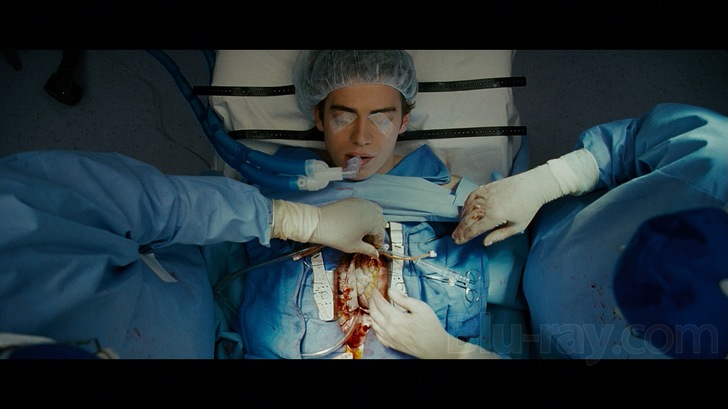
It features a young man who appears to be under general anesthesia, but he can feel the pain and tries to communicate with the surgical team. He screams:
“Wait… shouldn’t I be awake?”
And then:
“NOOOO!”
The surgery begins, and he seems to be feeling everything!
As an anesthesiologist, I am, obviously, outraged. And also… very intrigued.
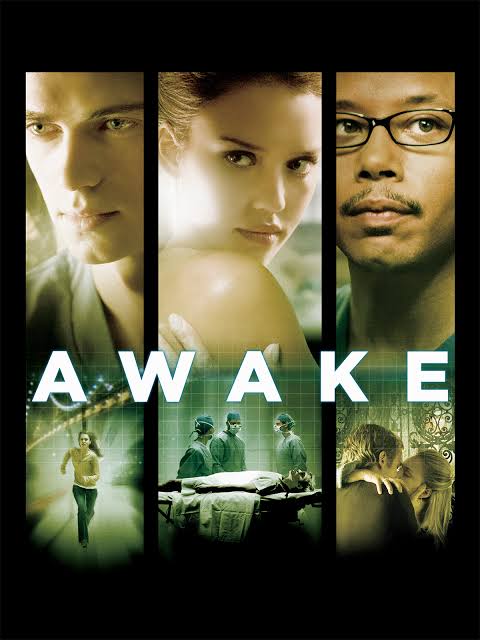
I immediately look up the movie featured in the video: Awake, a 2007 film. I watch it with my husband that same weekend and, right at the beginning of the story, he — who is not a doctor — asks me:
“Is that possible?”
To answer that question, we first need to understand that anesthesia has changed — a lot.
What happens during general anesthesia?
General anesthesia is not simply about “putting the patient to sleep.”
It involves several different components that need to be carefully controlled during surgery: unconsciousness, amnesia, analgesia, and, when necessary, immobility or muscle relaxation. All of this happens alongside hemodynamic management, including blood pressure and heart rate.
Today, we have a range of resources that, a few decades ago, might have seemed like science fiction.
We can continuously monitor blood pressure, heart rate, oxygenation, ventilation, and many other parameters. In selected situations, we can also use monitors based on brain electrical activity, which provide an estimate of the level of hypnosis. In addition, we can assess the degree of neuromuscular blockade and administer specific medications for each of these functions.
It is important to understand that being unconscious and not feeling pain are two different things.
When we talk about general anesthesia, the patient expects to lose consciousness — and for good reason. Without it, tolerating surgery would be extremely difficult.
The anesthetic drugs we use today are capable of producing adequate unconsciousness and amnesia for a wide variety of procedures. But pain needs to be treated through different mechanisms. That is why anesthetics are combined with analgesic medications, using carefully selected combinations according to the type and intensity of the surgical stimulus.
And there is yet another component: immobility.
This may be the most important point for understanding Awake.
Imagine being completely conscious during surgery but unable to move. That alone would be terrifying. Now imagine feeling pain, being fully aware of what is happening, and still being unable to tell anyone.
That is precisely why immobility, when necessary, is part of the anesthetic plan.
During certain surgeries, particularly those performed inside body cavities, movement can interfere with or even make the procedure impossible. For this reason, neuromuscular blocking agents may be used, producing different degrees of muscle relaxation.
But there is one fundamental point here: a paralyzed patient is not necessarily unconscious.
And that is exactly where Awake plays with one of the greatest fears surrounding anesthesia.
What about the movie?
The story revolves around a young man who remains conscious during surgery, feels everything that is happening, but is unable to communicate with the medical team.
No spoilers!
In the movie, he is completely still, apparently anesthetized, while consciously experiencing the entire procedure.
The idea is terrifying — and part of it is based on a real medical phenomenon called intraoperative awareness.
It can happen, although it is uncommon. In general, when it does occur, it does not look like the prolonged, perfectly lucid experience portrayed in the movie. Episodes may be brief and can occur particularly during periods when the depth of anesthesia is reduced, such as induction or emergence.
And here there is an important distinction between feeling awake and feeling pain. Intraoperative awareness can occur with different levels of perception and memory, and not every episode involves pain.
Furthermore, the anesthesiologist does not rely exclusively on a “consciousness monitor” to determine how the patient is doing.
So, how do we know if the patient is adequately anesthetized?
The patient’s medical history, the type of surgery, the medications being used, the doses administered, and the patient’s responses to stimuli all provide information that guides the management of anesthesia.
During the procedure, standard monitoring also provides valuable data. Changes in heart rate, blood pressure, ventilation, and other parameters may suggest responses to surgical stimulation and need to be interpreted within the clinical context.
In situations where the risk of intraoperative awareness is higher, additional strategies may be used, including monitoring brain electrical activity when indicated.
But perhaps the most important point is this: there is no single number on a screen that can, by itself, tell us whether a person is “100% anesthetized.”
Anesthesia is a combination of knowledge, medications, monitoring, and continuous assessment.
It is an Art!
The anesthesiologist is there precisely to integrate all of this information and adjust the anesthesia throughout the entire surgery.
And what about
Awake
?
In the end, Awake is one of those thrillers that are deliciously unsettling precisely because they can turn a medical fear into an agonizing story that, thankfully, we will never have to experience ourselves.
Available On: PrimeVideo


Deixe um comentário